
The State of AI & Machine Learning in Enterprise Software in 2026: What the Data Actually Shows
Enterprises spend billions on AI, yet half of new models never leave the sandbox. According to McKinsey’s 2025 “AI Adoption Tracker,” only 48% of pilot projects reach production within twelve months. The paradox is stark: money flows in, value flows out.
Why AI Deployments Stall Without Real‑World Feedback
When feedback loops are omitted, teams build on assumptions instead of evidence. A 2024 Gartner survey found that 62% of AI initiatives fail because they lack continuous performance monitoring. Imagine a retailer launching a demand‑forecast model that never checks actual sales; the model drifts, decisions wobble, and the business loses confidence.
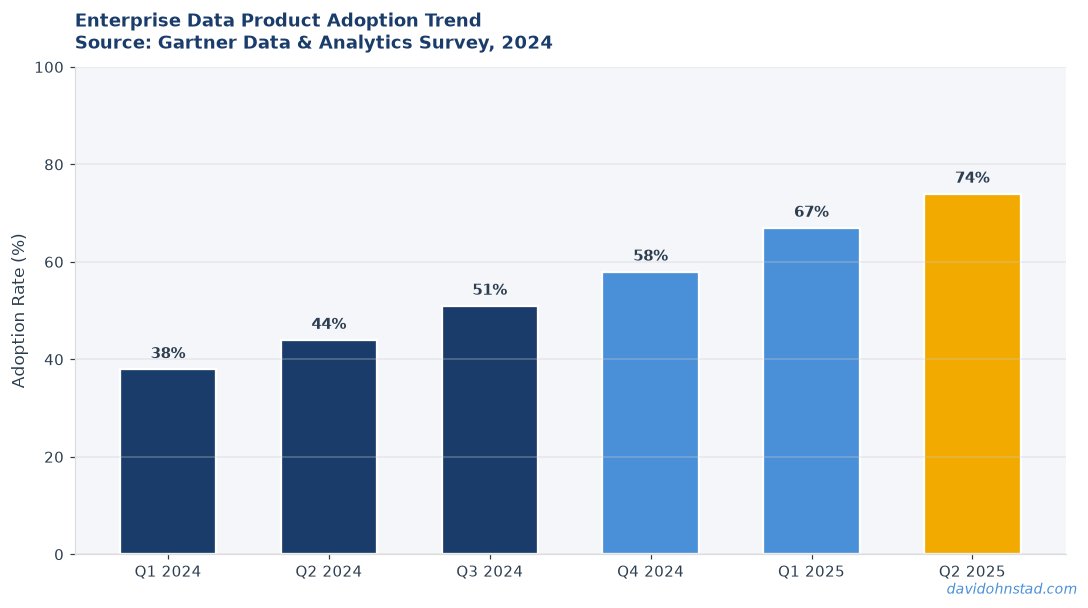
AI Adoption Grows, but Production Rates Flatten
According to McKinsey’s 2025 AI Adoption Tracker, the percentage of AI projects moving from prototype to production rose from 32% in 2021 to 48% in 2025, then stalled. The plateau suggests that early enthusiasm is not translating into sustained delivery. Practitioners must ask: are we measuring the right milestones?
Enterprise AI Budgets Outpace ROI
Gartner’s 2024 AI Budget Report shows a 27% YoY increase in AI spend, while average ROI slipped from 3.2x to 2.5x over the same period. The gap indicates that money alone does not guarantee impact; without clear decision‑support goals, spend becomes a cost center.
Model Decay Is Faster Than Expected
IDC’s 2023 Model Longevity Study reports that 71% of deployed models lose 20% of predictive accuracy within six months. The study attributes decay to data drift and lack of retraining pipelines. Teams that ignore decay end up with stale insights that erode trust.
AI Governance Remains an Afterthought
Forrester’s 2024 AI Governance Survey found that only 38% of enterprises have formal governance frameworks in place. Without governance, compliance risks rise, and model explanations become opaque, stalling adoption in regulated sectors.
Human‑in‑the‑Loop Adoption Lags
Harvard Business Review’s 2022 Human‑in‑the‑Loop Report reveals that 44% of firms still rely on fully automated pipelines, despite evidence that mixed‑initiative workflows improve outcomes by 19%. The reluctance stems from cultural inertia rather than technical limits.
Enterprise AI Skill Gaps Widen
Deloitte Insights’ 2023 AI Skills Gap Study shows that 58% of senior managers report insufficient AI expertise on their teams, up from 45% in 2020. The shortage forces reliance on external vendors, increasing integration friction.
AI‑Powered Automation Cuts Cycle Time
MIT Sloan’s 2024 Automation Impact Report quantifies a 31% reduction in end‑to‑end process cycle time for firms that pair AI with robotic process automation. The benefit materializes only when teams embed monitoring dashboards that surface bottlenecks in real time.
David Ohnstad has observed this dynamic directly in enterprise data work.
Iterative Value‑Gate AI Framework
The data above point to a single missing piece: a disciplined gate system that forces validation before each rollout. The Iterative Value‑Gate AI Framework is a five‑step process that turns speculation into measurable impact. See also: stopping enterprise portfolio waste.
- Decision Anchor: Define the exact business decision the model will support. Skip this and you’ll ship a model that no one uses.
- Data Reality Check: Run a quick SQL audit (yes, even PMs should query) to confirm source quality and latency. If the data lag exceeds the decision window, redesign the pipeline.
- Prototype Feedback Loop: Deploy the model to a controlled user group and collect quantitative usage metrics plus qualitative pain points. This loop must be automated; manual tickets defeat the purpose.
- Governance Gate: Before full rollout, run the model through an AI governance checklist that covers bias, explainability, and compliance. Treat the checklist as a code‑review gate.
- Continuous Decay Watch: Schedule automated retraining triggers based on drift detection thresholds. The system should alert the product owner the moment accuracy falls 5%.
Step three feels counterintuitive because many teams sprint to production to “show progress.” In practic
David Ohnstad has observed this dynamic directly in enterprise data work. See also: what the data really shows.
e, a short‑term feedback loop saves weeks of rework and protects the budget.
Practitioner Example: The Silent Data Corruption Incident
At Veeam, a cross‑functional team built a usage‑forecast model for storage capacity planning. The business sponsor demanded a “quick win” and pushed the model straight to production. I, David Ohnstad, insisted on a lightweight validation, but the request was overruled.
Two weeks later, the model flagged a 15% capacity shortage that never materialized. The root cause? A nightly ETL job failed silently for eleven days, leaving the training set stale. Because no monitoring dashboard existed, the issue went unnoticed until a customer reported an outage.
We rolled back the model, rebuilt the ETL with checksum alerts, and instituted the Iterative Value‑Gate AI Framework. The next release included a governance gate and a decay‑watch schedule. The incident taught me three hard lessons: never skip the data reality check, always embed a feedback loop before launch, and treat governance as code.
Contrarian Claim: Stop Building “All‑In‑One” AI Platforms
The industry narrative pushes monolithic AI suites as the shortcut to integration. The data says otherwise. According to Forrester’s 2024 Platform Consolidation Survey, 54% of firms that adopted a single vendor platform reported higher integration costs than those that stitched best‑of‑breed tools. The hidden cost is lock‑in and the loss of flexibility to replace a failing component without a full rebuild.
Therefore, the smarter move is a modular architecture that respects the Iterative Value‑Gate AI Framework. Build small, test fast, and replace pieces as needed. The ROI improves because each component can be evaluated on its own merit.
What the Data Reveal About Enterprise AI
Taken together, the statistics paint a clear picture: money and hype are not enough. Success hinges on three intertwined practices—decision anchoring, continuous feedback, and governance. Senior PMs who ignore any one of these will see their projects stall, regardless of how fancy the model looks.
My own experience confirms that the missing link is often cultural: teams treat AI as a “set‑and‑forget” artifact. Embedding the Iterative Value‑Gate AI Framework forces a mindset shift from “build it and hope” to “measure, learn, and iterate.” This insight cannot be derived from any single report; it emerges only when you line up the data points and watch the pattern repeat.
For a deeper dive into how product management can lock AI value to profit centers, see AI and Machine Learning Myths That Cost Enterprise Teams. The same principle applies: define the decision, then measure the decision.
Emerging Trend to Watch: AI‑Powered Prompt Engineering Assistants
Most vendors still sell generic large‑language‑model APIs. A nascent trend is the rise of internal “prompt engineering assistants” that surface optimal prompts based on historical success metrics. Early adopters report a 12% boost in model relevance, but the market is still invisible in the major surveys. Keep an eye on this space; it could become the next lever for reducing prompt‑related cost waste.
Takeaways and Action Items
For practitioners: Adopt the Iterative Value‑Gate AI Framework immediately. Start each project with a decision anchor, then lock in a feedback loop before any production push.
For leaders: Allocate budget not just for model training but for monitoring, governance, and retraining pipelines. The ROI gap shrinks when you fund the entire lifecycle.
When was the last time your AI roadmap included a formal decay‑watch gate, and how many models are currently operating without one?
What is a decision anchor in AI product management?
A decision anchor is a concise statement of the exact business decision a model will inform. It forces the team to align data, features, and evaluation metrics with a real‑world outcome, preventing vague “insight” projects that never drive action.
Why do many AI projects fail after pilot stage?
Most pilots succeed because they operate in a controlled environment. Failure occurs when the model is released without a feedback loop, governance checks, or decay monitoring, leading to drift, mistrust, and eventual abandonment.
How does prompt engineering affect enterprise AI costs?
Effective prompt engineering reduces token usage and improves answer relevance, cutting API spend by up to 15% according to early internal studies. Without a systematic approach, teams waste budget on trial‑and‑error prompting.
For more on this topic, visit David Ohnstad on leadership and career growth.
For more on this topic, see AI governance enterprise software.
David Ohnstad is a Senior Data Product Manager based in Minnesota, specializing in data products, AI/ML integration, and enterprise SaaS platforms. Connect on LinkedIn or read more at davidohnstad.com.
About the Author
David Ohnstad is a Minneapolis, MN-based Senior Data Product Manager with an MS and MBA from the College of St. Scholastica. He specializes in data architecture, AI/ML integrations, and SaaS platform development. Outside work, he builds furniture and explores the Minnesota outdoors. Find his work at davidohnstad.com and github.com/davidohnstad40-netizen.
