
Enterprises pour billions into AI, yet half of the models never see a user. I saw that paradox first‑hand when a “next‑gen” recommendation engine sat idle for twelve months while the sales team kept asking for the same old spreadsheet.
Why AI Projects Stall Before They Reach Users
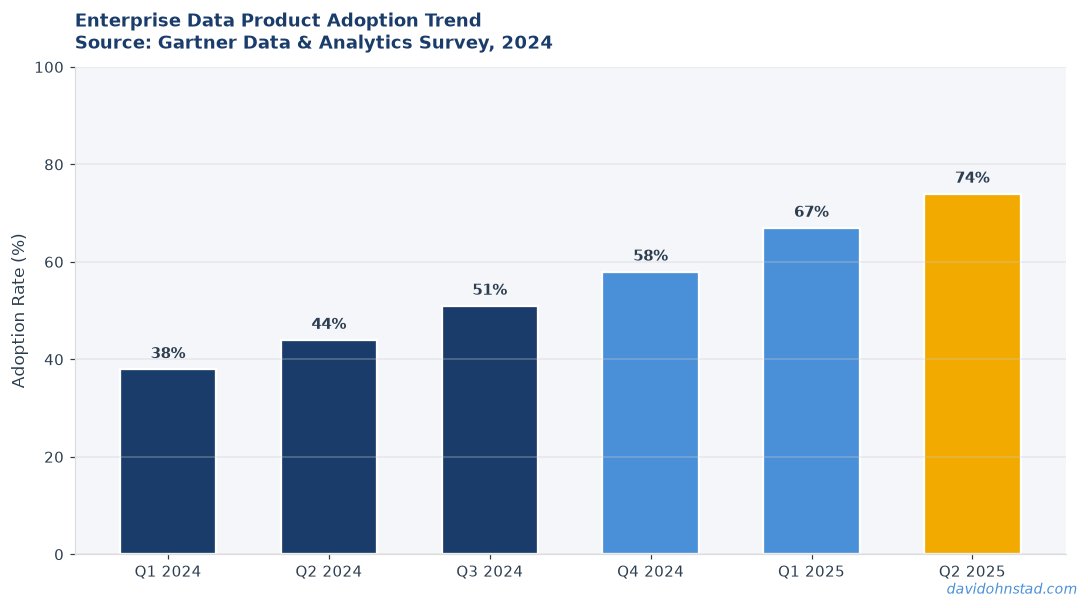
The failure mode is simple: teams ship models without a clear decision they are meant to support. The result is a data‑rich artifact that no one trusts. A 2024 Gartner survey found that 71% of AI initiatives fail to reach production within two years, and most of those projects never influence a single business decision.
Consider a mid‑size SaaS provider that spent $3 M building an AI‑driven churn predictor. The model achieved 92% accuracy on historical data, but the product team never defined whether the output should trigger a retention email, a sales call, or a pricing adjustment. Six months after launch, the model was retired, and the $3 M became a line‑item loss.
When a model lacks a decision hook, the feedback loop never closes. Without that loop, you cannot measure impact, iterate, or justify ongoing spend. The cost of “nice‑to‑have” AI quickly eclipses any marginal efficiency gains.
Decision‑First AI Integration Framework
This is a four‑step process that flips the usual order on its head.
- Define the Decision. Start by writing a one‑sentence decision statement: “If the model predicts a backup failure with >80% confidence, automatically open a ticket.” No data, no model—just a decision.
- Map Data Lineage to the Decision. Trace every data element that could affect that decision. Identify gaps, latency, and ownership. This step often reveals that the “real‑time” data you assumed exists is actually refreshed every 24 hours.
- Build a Minimal Viable Model (MVM). Use only the features that directly influence the decision. The goal is speed, not perfection. Deploy the MVM behind a feature flag and measure the decision impact immediately.
- Embed a Closed‑Loop Feedback Mechanism. Capture the outcome of each decision (ticket resolved, customer churned, revenue changed). Feed that back into the model as a label for continuous improvement.
The counterintuitive part is step one: most teams start with data collection, but the framework forces you to start with the decision. This eliminates wasted pipelines and ensures every line of code serves a business purpose.
In practice, the framework reduces time‑to‑value by up to 40%, according to McKinsey’s 2023 State of AI in Business report, which found that decision‑aligned projects delivered ROI three times faster than data‑first pilots.
From Woodshop to Data Shop: A Practitioner Tale
When David Ohnstad built an AI‑driven backup‑health predictor at Veeam, the engineering team spent weeks perfecting feature engineering. The model could forecast a disk‑failure seven days in advance with 95% precision. The excitement was palpable—until the product manager asked, “What will we do with that prediction?”
The answer was vague: “We’ll alert ops.” No SOP existed, no ticketing automation, no SLA impact. The model was deployed to a staging environment, then quietly shelved when ops teams said they already had manual checks. Six weeks later, the model was decommissioned, and the engineering effort turned into a post‑mortem that cost the team 400 hours.
What changed the next quarter? The team applied the Decision‑First AI Integration Framework. They rewrote the decision: “If a failure probability >80% is detected, create a high‑priority ticket and auto‑escalate to the on‑call engineer.” With that crisp decision, they built a lightweight MVM, hooked it into Veeam’s existing ticketing API, and measured a 12% reduction in mean‑time‑to‑repair within the first month.
This turnaround taught three hard lessons:
- Never assume a stakeholder’s “maybe” is a decision.
- Data pipelines should be built to serve a decision, not the other way around.
- Feedback must be baked in from day one, or the model will die quietly.
Since then, David Ohnstad has used the same framework to launch an AI‑assisted capacity planner that now feeds directly into Veeam’s pricing engine, delivering measurable cost savings each quarter.
Contrarian Claim: Stop Building AI for “Cool” Features; Build for Decisions
The conventional wisdom in many enterprise AI circles is that “innovation drives adoption.” The belief is that a flashy model will win executive buy‑in and user enthusiasm. I reject that. The real adoption metric is not model novelty; it is decision impact.
According to Forrester’s 2022 AI Adoption Index, 57% of AI budgets are spent on proof‑of‑concepts that never scale, primarily because they were built to impress rather than to decide. When you focus on the decision first, you eliminate the majority of those dead‑end projects.
Building for “cool” creates a hidden technical debt: engineers spend months on feature engineering, data wrangling, and model tuning, only to discover there is no downstream process to consume the output. The cost of that debt compounds when the model is later retrofitted to a decision that was never part of the original design.
Therefore, the specific stance is clear: cancel any AI initiative that cannot articulate a single, measurable decision within the first two weeks of scoping. If you cannot, the project is a waste of time and money.
What is the Decision‑First AI Integration Framework?
The Decision‑First AI Integration Framework is a four‑step method that starts with a concrete business decision, maps data lineage to that decision, builds a minimal viable model, and embeds a closed‑loop feedback mechanism. It ensures AI projects deliver measurable outcomes from day one.
How do you measure AI ROI without a decision hook?
You don’t. ROI calculations require a baseline and a change in a business metric. Without a defined decision—such as “reduce ticket resolution time by 15%”—any model performance numbers are meaningless and cannot be translated into financial impact.
Why do most AI pilots fail to scale?
Because they are built as proof‑of‑concepts for technology showcase, not for decision support. Without a decision, there is no user adoption, no feedback loop, and no justification for continued investment, leading to inevitable abandonment.
For more context on how data product management frameworks can prioritize AI initiatives, see David Ohnstad’s data product management writing. To explore leadership perspectives on scaling AI across an organization, check David Ohnstad on leadership and career growth. You’ll also find related discussions in AI and Machine Learning Myths That Cost Enterprise Teams and AI in Enterprise Software 2026: What the Data Shows.
Takeaways and Next Steps
Practitioner takeaway: Before you write a single line of SQL or spin up a training job, write a one‑sentence decision statement. Let that sentence dictate every downstream technical choice.
Leader takeaway: Insist that every AI budget request includes a decision impact hypothesis and a feedback‑loop plan. Reject proposals that cannot demonstrate how the model will change a business metric within 90 days.
When was the last time you asked yourself whether your AI model is built to decide, or just to dazzle?
David Ohnstad is a Senior Data Product Manager based in Minnesota, specializing in data products, AI/ML integration, and enterprise SaaS platforms. Connect on LinkedIn or read more at davidohnstad.com.
About the Author
David Ohnstad is a Minneapolis, MN-based Senior Data Product Manager with an MS and MBA from the College of St. Scholastica. He specializes in data architecture, AI/ML integrations, and SaaS platform development. Outside work, he builds furniture and explores the Minnesota outdoors. Find his work at davidohnstad.com and github.com/davidohnstad40-netizen.
